

Cosmopolitan Literary House

A Literary Autumn: Books for October
O ctober invites a different kind of reading. The days grow shorter, the evenings become quieter, and the world outside seems to slow down just enough for a book to take over. It is a month for atmospheric novels, unsettling mysteries, forgotten classics and stories that linger long after the final page.
For our October reading list, we have selected four books that capture something of the season — not necessarily through autumnal settings, but through their atmosphere, their mysteries and their ability to draw us into another world. Some may be familiar, others less expected, but each offers a reason to set everything else aside for a while.
Make a cup of tea, find a comfortable place to read, and let October belong to these four stories.
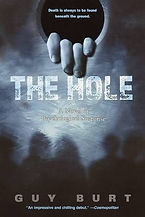
The Hole by Guy Burt
What happens when a practical joke becomes a matter of life and death? In Guy Burt’s The Hole, five boarding-school students descend into an abandoned cellar, expecting an adventure. Their decision sets in motion a disturbing chain of events that exposes the secrets beneath their carefully maintained friendships. First published in 1993, this tightly constructed psychological thriller turns an ordinary teenage rebellion into a study of obsession, control and the unreliability of appearances.
This October, we recommend Burt’s novel for its unsettling premise and its ability to transform an enclosed space into a world of suspicion, where every revelation changes the meaning of what came before.
Publication date: 1993
Length: 190 pages
Cloud Atlas by David Mitchell
A nineteenth-century voyager, a composer hiding a scandal, a journalist investigating a nuclear conspiracy, a publisher on the run and a genetically engineered woman awaiting execution: the protagonists of Cloud Atlas inhabit radically different worlds, yet their stories are bound together in ways that become apparent only as the novel unfolds. David Mitchell constructs his ambitious narrative like a series of nested Russian dolls, interrupting each story at its climax before returning to it later, transformed by everything the reader has discovered in the meantime.
What makes the novel remarkable is not simply its elaborate architecture, but Mitchell’s ability to move between literary styles without losing the individuality of each narrative. The result is a work that challenges conventional ideas of plot, chronology and literary form while remaining deeply concerned with the choices people make when confronted with power, injustice and their own mortality.
For our October selection, we recommend Cloud Atlas as a novel to inhabit rather than merely finish: a work whose connections emerge gradually, rewarding attentive readers with a perspective that no single narrative could offer alone.
Publication date: 2004
Length: 529 pages

Mystery Play by Elizabeth Kostova
Some literary figures belong so completely to the imagination that every generation must discover them anew. Dracula is one of them. In Mystery Play, Elizabeth Kostova returns to the world of The Historian, the novel that made the pursuit of the legendary vampire an expansive journey through history, scholarship and inherited secrets. Her new novel brings that fascination into the theatrical culture of the Gilded Age, where the boundary between a character and the person portraying him becomes a source of Gothic unease.
Jay Turner, the last living member of a family marked by its encounters with Dracula, discovers a mysterious medieval volume and a fragment of newspaper bearing the name of Gael Brogan, a nineteenth-century actor celebrated for his portrayal of the vampire. His investigation leads to the diary of a young Shakespearean actress and a history in which theatrical ambition, obsession and an ancient evil become entangled. As in The Historian, the past is not a distant setting but a force that continues to shape the present.
For readers who loved the intellectual expansiveness of The Historian, Mystery Play promises another journey into Kostova’s literary world, with the added fascination of nineteenth-century theatre. It is an apt October choice for anyone drawn to Gothic fiction in which historical research and supernatural mystery meet—and in which the oldest stories still have the power to surprise us.
Publication date: October 13, 2026
Length: 592 pages

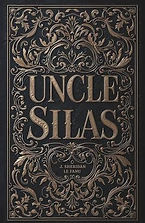
Uncle Silas by J. Sheridan Le Fanu
Few Gothic novels make a house feel as threatening as Uncle Silas. First published in 1864, Sheridan Le Fanu’s masterpiece places its young heroine, Maud Ruthyn, in a world where danger rarely announces itself openly. After her father’s death, Maud is sent to live with her mysterious uncle, a man surrounded by scandal and suspicion. At Bartram-Haugh, an imposing country house filled with uneasy silences and concealed intentions, the familiar comforts of family and domestic life gradually become sources of dread.
What makes Le Fanu’s novel so compelling is the uncertainty at its heart. The reader, like Maud, must interpret gestures, conversations and seemingly ordinary events without knowing whom to trust. The threat is not simply that something terrible might happen, but that Maud may be unable to recognise the danger until her choices have already been taken away. Le Fanu turns the conventions of the Victorian Gothic novel into a study of vulnerability, manipulation and the precarious position of a young woman whose future depends on people whose motives she cannot fully understand.
The novel’s power lies in its psychological precision. Rather than relying on constant supernatural spectacle, Le Fanu allows suspicion to accumulate through the architecture of the house, the behaviour of its inhabitants and the heroine’s struggle to distinguish intuition from fear. Bartram-Haugh becomes more than a setting: it embodies a closed social world in which authority can conceal cruelty and respectability can disguise sinister intentions. The result is a novel whose atmosphere remains unsettling precisely because its dangers feel humanly possible.
For October, Uncle Silas offers a rewarding return to Gothic fiction at its most sophisticated: a story of inheritance, secrecy and domestic menace in which suspense grows from what cannot be known. Readers drawn to psychological mysteries and the darker side of Victorian literature will find that Le Fanu’s novel has lost little of its power to unsettle.
Publication date: 1864
Length: 528 pages (Penguin Classics edition).
Prepared by the editorial team of The Belles Letters Review.