

Cosmopolitan Literary House
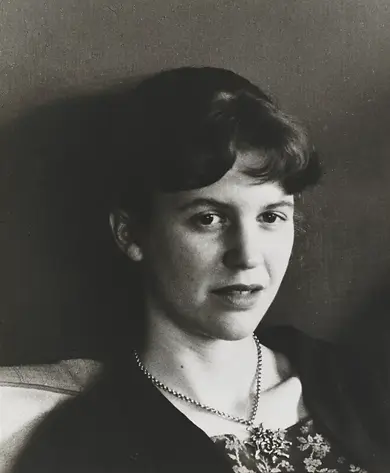
Sylvia Plath and The New Yorker:
The Discipline Behind the Voice
ESSAYS & MEMOIR
October 27, 2026
The editor reflects on Sylvia Plath’s literary ambition, editorial rejection, and the work of becoming a published writer on the anniversary of her birth.
Sylvia Plath and The New Yorker: Inside the Making of a Published Poet
In June 1958, Sylvia Plath received a letter from Howard Moss, the poetry editor of The New Yorker. Moss had accepted two of her poems, “Mussel Hunter at Rock Harbor” and “Nocturne,” for publication. The decision marked an important moment in Plath’s long pursuit of the magazine, but it did not bring the process to an immediate close. Moss raised concerns about the length of “Mussel Hunter at Rock Harbor,” and publication could be delayed until the following summer.
The correspondence between Plath and The New Yorker reveals how much editorial work could stand between a poem’s submission and its appearance in print. Acceptance was not always final; titles, structure, imagery, and even a poem’s underlying meaning could become subjects of negotiation. Plath’s exchanges with Moss document a writer repeatedly revising her work while defending the intentions behind it.
In his chapter “‘Sincerely Yours’: Plath and The New Yorker,” published in Sylvia Plath in Context by Cambridge University Press in 2019, Peter K. Steinberg examines this relationship through the magazine’s correspondence with Plath, preserved in the New York Public Library. These letters offer a detailed record of her attempts to publish in one of the most influential literary magazines in the United States — and of the editorial decisions that shaped the poems readers eventually encountered.
The magazine that came first
Plath’s pursuit of The New Yorker began well before Howard Moss accepted her poems in 1958. In February 1953, she submitted “To Eva Descending the Stair,” “Doomsday,” and “Mad Girl’s Love Song” to the magazine. It was her first choice: she intended to send her work to The New Yorker before approaching other publications, including The Atlantic and Harper’s, if it was rejected.
The magazine remained a priority as Plath’s writing career developed. By 1958, her poems had appeared in literary magazines and academic journals, yet she had not secured a publication in The New Yorker. Her continued submissions to the magazine therefore formed part of a longer effort to place her work in a publication she regarded as particularly important.
The acceptance of “Mussel Hunter at Rock Harbor” and “Nocturne” in June 1958 was the first substantial breakthrough in that effort. But the correspondence that followed would show that getting a poem into The New Yorker involved more than receiving an editor’s approval. Plath and Moss would continue to negotiate the poems themselves — sometimes over individual words, sometimes over the relationship between a poem’s form and its meaning.
A contract, and a new set of expectations
In February 1961, Plath received a first-reading contract from The New Yorker. The arrangement followed an intervention by the poet W. S. Merwin, who contacted Howard Moss on Plath’s behalf. Merwin drew attention to the financial difficulties faced by Plath and her husband, Ted Hughes, and to his close friendship with the couple. The contract gave Plath’s work a more formal place in the magazine’s submission process, although it did not guarantee that any particular poem would be accepted.
On February 21, Plath sent Moss a group of five poems: “Morning Song,” “Parliament Hill Fields,” “Whitsun,” “Night Thoughts,” and “A Life.” The submission brought together work that would become associated with her developing poetic voice, but the magazine did not accept the poems. On March 7, Moss sent his response, rejecting the group.
The contract had changed the terms of Plath’s relationship with the magazine, but it had not removed the editorial barrier. Her poems would still have to persuade Moss and the other editors individually—and, as the subsequent correspondence shows, their decisions could turn on questions of structure, title, and whether a poem communicated what Plath intended.
“The Rival”
In 1961, Plath submitted “The Rival” to The New Yorker. Howard Moss admired the poem’s hostility, vocabulary, and tone, but the editors found its title and its relationship to the poem’s two sections difficult to understand. Their uncertainty concerned not the intensity of the writing, but the identity and position of the speaker — and how the poem’s structure conveyed that relationship.
Plath explained her intention in a letter to Moss. The poem contrasted an ordinary housewife and mother with a woman who appeared almost superhuman in her power and dominance. The two sections were meant to establish this opposition. Plath was willing to remove the second section and accepted that the title might need to change if doing so would make the poem clearer.
The editors nevertheless rejected “The Rival” on September 26, 1961. In their response, they indicated that without Plath’s explanatory letter, the poem did not make sense to them. Her account clarified the intended contrast, but it did not resolve their difficulty with the poem as it stood. The exchange left a precise editorial problem on record: the meaning Plath described in her letter was not sufficiently legible in the submitted text itself.
“Mirror Talk” becomes “Mirror”
In late 1961, Plath sent Howard Moss another group of poems, including “The Moon and the Yew Tree,” “Mirror Talk,” “The Babysitters,” and “Last Words.” The November submission resulted in the acceptance of “The Moon and the Yew Tree” and “Mirror Talk,” but Moss proposed a change to the latter’s title.
His objection was specific: he disliked the word “Talk” in a poem’s title. He referred to “Happy Talk,” a song from the musical South Pacific, as an example of the association he wanted to avoid. For Moss, the title “Mirror Talk” carried an unwanted implication that could be removed by simplifying it to “Mirror.”
Plath accepted the change. In her reply, she described herself as “a rather numb hand at titles,” acknowledging that naming her poems was not her strongest skill. The poem therefore entered the magazine under the shorter title, “Mirror”— a small editorial adjustment documented in the correspondence between poet and editor.
“Elm”
When Plath submitted “Elm” to The New Yorker in June 1962, Howard Moss was impressed by the poem but found parts of it obscure. The editors were also puzzled by its dedication to Ruth Fainlight. Plath resubmitted the poem in August without the dedication and explained that Fainlight had no direct connection to the speaker or the poem’s subject. The voice, she clarified, belonged to an elm addressing a woman who was contemplating it. The tree and the woman shared certain moods and forms of anguish.
Moss described the poem as “wild & desperate.” He accepted it, while suggesting that the title might be changed to “The Elm Speaks” or “Speaking Elm.” He also acknowledged that the editors had expected readers to encounter the same difficulties they had experienced, and recognised that this expectation was unfair to the poem.
The acceptance was especially significant to Plath. In a letter dated October 10, 1962, she told Moss that it was the happiest acceptance she had received so far. The correspondence records not only the editors’ initial uncertainty, but also Plath’s explanation of the poem’s voice and the eventual decision to publish it.
“Blackberrying”
Howard Moss accepted “Blackberrying” in October 1961, but his response included a question about two lines in the poem’s final stanza.
Plath had written:
“To the hills’ northern face, their faces are orange rock.
They look out on nothing …”
Moss’s question prompted Plath to revise the passage:
“To the hills’ northern face, and the face is orange rock
That looks out on nothing …”
The revision altered the relationship between the landscape and the speaker’s perception of it. In the original version, the plural “their faces” gives the hills a collective presence, while “They look out” makes the hills themselves the subject of the next sentence. In the revised lines, the singular “the face” narrows the image to one surface, and the relative clause “That looks out on nothing” attaches the act of looking directly to that face.
The exchange shows Moss’s editorial attention operating at the level of syntax. His question concerned only two lines, but Plath’s response changed how the landscape was grammatically presented—and how the poem’s final image was perceived.
Forty-two poems in a few months
In the autumn of 1962, Plath sent The New Yorker an unusually large volume of work. She submitted five groups of poems in October, three in November, and another in December. According to Peter K. Steinberg, the submissions amounted to forty-two new poems. The pace of this correspondence offers a record of the extraordinary concentration of Plath’s writing during the final months of her life.
Moss singled out “Wintering” as particularly fine, but the magazine rejected the group in which it appeared. His admiration for an individual poem did not translate into acceptance of the submission as a whole. The distinction mattered: even when an editor recognised the quality of a poem, that judgment did not necessarily determine the fate of the surrounding work.
One poem, “Amnesiac,” followed a different path. Plath submitted it in October in two parts. Moss could not see how the sections belonged together and preferred the second part. Plath sent the poem again in November, explaining that the second section was independent of the first. The opening section, she clarified, concerned a forgotten town; the two parts were not intended to form a single continuous poem.
Moss accepted “Amnesiac” on November 30. The decision followed Plath’s clarification of the poem’s structure and the relationship between its sections. In this instance, the correspondence helped resolve a question of form that had initially prevented the editors from understanding the submission.
The final submissions
In January and February 1963, Plath sent The New Yorker two further groups of poems. The final submission included “Kindness,” “Mystic,” “Words,” “Edge,” “Balloons,” and “Contusion.” According to Peter K. Steinberg, “Mystic” was the only poem accepted from these last submissions. The magazine accepted it after Plath’s death.
Plath died in February 1963. In a letter to Ted Hughes that month, Howard Moss expressed his shock at her death and conveyed how greatly he had admired her poems. His response came after months of correspondence in which the editors had questioned individual lines, titles, structures, and meanings — and in which Plath had repeatedly explained and revised her work.
The letters document a relationship that continued to the end of Plath’s life. They also preserve the editorial history of poems that reached The New Yorker through a process of submission, rejection, clarification, and revision.
Further reading
Peter K. Steinberg, “‘Sincerely Yours’: Plath and The New Yorker,” in Sylvia Plath in Context, edited by Tracy Brain, Cambridge University Press, 2019, pp. 51–62.
Gail Crowther and Peter K. Steinberg, “These Ghostly Archives 4: Looking for New England,” Plath Profiles, for archival research into Plath’s correspondence and professional records.
Jon Michaud, “Eighty-Five from the Archive: Sylvia Plath,” The New Yorker, 26 April 2010.